
Over 16,533,829 people are on fubar.
What are you waiting for?
 After months of on and off labor, my brother has finally completed his copy of Paul Gauguin's "Bonjour Monsieur Gauguin".
Done at last. Done at last. Great God Almighty, done at last.
After months of on and off labor, my brother has finally completed his copy of Paul Gauguin's "Bonjour Monsieur Gauguin".
Done at last. Done at last. Great God Almighty, done at last.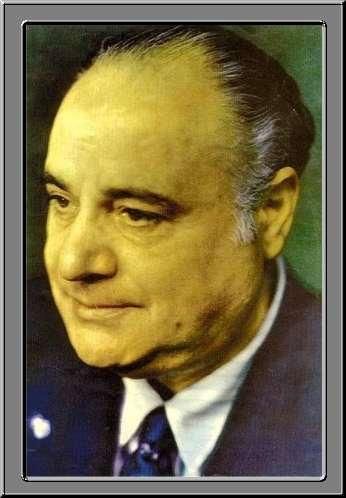 Beniamino Gigli
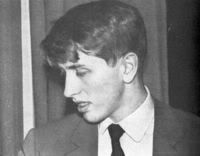 Fischer's career-long stubbornness about match and tournament conditions was again seen in the run-up to his world championship match with Boris Spassky. The match took place in Iceland, from July through September 1972. Fischer lost the first two games in strange fashion: the first when he played a risky pawn-grab in a dead-drawn endgame, the second by forfeit when he refused to play the game in a dispute over playing conditions. Fischer would likely have forfeited the entire match, but Spassky, not wanting to win by default, yielded to Fischer's demands. The rest of the match proceeded without incident. Fischer won seven of the next 19 games, losing only one and drawing eleven, to win the match and become the 11th World Chess Champion.
Fischer was scheduled to defend his title against challenger Anatoly Karpov in 1975 and he laid down numerous conditions for the match. All but two were met and Bobby disappeared until 1982 when he published a pamphlet, "I Was Tortured in the Pasadena Jailhouse!" detailing his experiences following his arrest in 1981 after being mistaken for a bank robber. Fischer alleged that the police treated him brutally. He was eventually charged with damaging prison property (a mattress).
Ten years later in 1992, Fischer re-emerged to play Spassky again for a reported purse of five million dollars. This time the match was in Yugoslavia, in spite of a severe United Nations embargo that included sanctions on sporting events. Following the match, which Bobby won handily, the U.S. Department of the Treasury obtained an arrest warrant for him although some dispute the legality of the Department's claim and question why others who broke the embargo have not been prosecuted.
Hours after the September 11, 2001 attacks, Fischer was interviewed live by Pablo Mercado on the Bombo Radyo network. Fischer commented on U.S and Israeli foreign policy that "nobody cares ... the US and Israel have been slaughtering the Palestinians for years". Informed that "the White House and Pentagon have been attacked", he proclaimed, "This is all wonderful news. What goes around comes around even for the United States" and said that if the U.S. fails to change its foreign policy, it "has to be destroyed." After calling for the death of President Bush, Fischer also stated he hoped that a coup d' etat would take over power in the U.S. and execute hundreds of thousands of American Jewish leaders, arrest all the Jews and close all synagogues. Bobby was Jewish, a fact that he always denied.
After years of evading arrest, in July of 2004 Fischer was arrested in Narita, Japan for allegedly using a revoked U.S. passport while trying to board an airplane. Fischer used a genuine passport that the United States Embassy issued to him in 1997. The passport was allegedly revoked in 2003, although Fischer asserts that it was valid.
Fischer's career-long stubbornness about match and tournament conditions was again seen in the run-up to his world championship match with Boris Spassky. The match took place in Iceland, from July through September 1972. Fischer lost the first two games in strange fashion: the first when he played a risky pawn-grab in a dead-drawn endgame, the second by forfeit when he refused to play the game in a dispute over playing conditions. Fischer would likely have forfeited the entire match, but Spassky, not wanting to win by default, yielded to Fischer's demands. The rest of the match proceeded without incident. Fischer won seven of the next 19 games, losing only one and drawing eleven, to win the match and become the 11th World Chess Champion.
Fischer was scheduled to defend his title against challenger Anatoly Karpov in 1975 and he laid down numerous conditions for the match. All but two were met and Bobby disappeared until 1982 when he published a pamphlet, "I Was Tortured in the Pasadena Jailhouse!" detailing his experiences following his arrest in 1981 after being mistaken for a bank robber. Fischer alleged that the police treated him brutally. He was eventually charged with damaging prison property (a mattress).
Ten years later in 1992, Fischer re-emerged to play Spassky again for a reported purse of five million dollars. This time the match was in Yugoslavia, in spite of a severe United Nations embargo that included sanctions on sporting events. Following the match, which Bobby won handily, the U.S. Department of the Treasury obtained an arrest warrant for him although some dispute the legality of the Department's claim and question why others who broke the embargo have not been prosecuted.
Hours after the September 11, 2001 attacks, Fischer was interviewed live by Pablo Mercado on the Bombo Radyo network. Fischer commented on U.S and Israeli foreign policy that "nobody cares ... the US and Israel have been slaughtering the Palestinians for years". Informed that "the White House and Pentagon have been attacked", he proclaimed, "This is all wonderful news. What goes around comes around even for the United States" and said that if the U.S. fails to change its foreign policy, it "has to be destroyed." After calling for the death of President Bush, Fischer also stated he hoped that a coup d' etat would take over power in the U.S. and execute hundreds of thousands of American Jewish leaders, arrest all the Jews and close all synagogues. Bobby was Jewish, a fact that he always denied.
After years of evading arrest, in July of 2004 Fischer was arrested in Narita, Japan for allegedly using a revoked U.S. passport while trying to board an airplane. Fischer used a genuine passport that the United States Embassy issued to him in 1997. The passport was allegedly revoked in 2003, although Fischer asserts that it was valid.
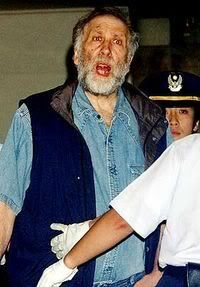 Seeking ways to evade deportation to the United States, Fischer wrote a letter to the government of Iceland in early January 2005 and requested an Icelandic citizenship. When Japanese authorities received confirmation of Fischer's new citizenship, they agreed to release him and allow him to fly to Iceland. Although Iceland has an extradition treaty with the United States, Icelandic law does not permit its own citizens to be extradited. Icelandic officials reiterated their belief that the United States government had singled Fischer out for his political statements.
On Dec. 10, 2006, Fischer phoned a television station and pointed out a clever winning combination, which was missed in a chess game that was televised in Iceland.
I spoke with William Lombardi, a grand master who was Bobby's Second in his world championship match with Spassky, and a close friend of Bobby. Actually, I played chess with him and got my ass kicked, but that's another story. I got the impression that Bobby was a brilliant man with the temperament and social skills of a six-year old child. Bobby was an easy target for the hooker who broke his heart and for radio preachers who put the touch on him for a tithe. Somewhere along the path of life, Bobby "lost it".
Today, Bobby is revered by many as the greatest player ever to grace the game of chess. His fans tend to overlook his eccentricity and political views.
I believe that a great man has never existed, only great speakers, artists, politicians, musicians, writers… If you judge a man by his weaknesses, you will never understand his greatness, and Bobby Fischer was truly a genius – a word that I use only on rare occasion.
Seeking ways to evade deportation to the United States, Fischer wrote a letter to the government of Iceland in early January 2005 and requested an Icelandic citizenship. When Japanese authorities received confirmation of Fischer's new citizenship, they agreed to release him and allow him to fly to Iceland. Although Iceland has an extradition treaty with the United States, Icelandic law does not permit its own citizens to be extradited. Icelandic officials reiterated their belief that the United States government had singled Fischer out for his political statements.
On Dec. 10, 2006, Fischer phoned a television station and pointed out a clever winning combination, which was missed in a chess game that was televised in Iceland.
I spoke with William Lombardi, a grand master who was Bobby's Second in his world championship match with Spassky, and a close friend of Bobby. Actually, I played chess with him and got my ass kicked, but that's another story. I got the impression that Bobby was a brilliant man with the temperament and social skills of a six-year old child. Bobby was an easy target for the hooker who broke his heart and for radio preachers who put the touch on him for a tithe. Somewhere along the path of life, Bobby "lost it".
Today, Bobby is revered by many as the greatest player ever to grace the game of chess. His fans tend to overlook his eccentricity and political views.
I believe that a great man has never existed, only great speakers, artists, politicians, musicians, writers… If you judge a man by his weaknesses, you will never understand his greatness, and Bobby Fischer was truly a genius – a word that I use only on rare occasion.
 Charles Bukowski - Factotum
 What matters most is how you walk through fire.


